
- Home
- Sculpture and Dimensional Surfaces
Sculpture and Dimensional Surfaces
Gold leaf, metal leaf, and traditional preparation paths for sculpture, ornament, relief work, and three-dimensional forms
Sculpture presents one of the most compelling uses for gilding. Gold leaf and metal leaf bring light, contrast, and definition to dimensional surfaces in a way that paint alone cannot. Whether the work is carved wood, cast resin, plaster, composition ornament, clay relief, or mixed-media sculpture, the gilding system must respond to contour, texture, durability needs, and the visual character of the form itself.
Gilding sculpture and three-dimensional objects calls for different methods depending on the piece. Some projects call for traditional gesso, bole, and water gilding. Others require oil size or water-based size over prepared surfaces. Some sculptural work is best served by genuine gold leaf, while other projects benefit from imitation gold, aluminum, copper, variegated leaf, or toned metal finishes. The right path depends on the material, the level of detail, and the final look you want to achieve.
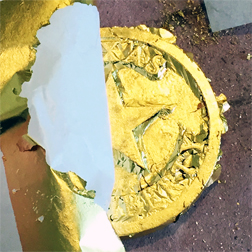
Path 1: Traditional Sculptural Gilding
Best for carved wood sculpture, composition ornament, relief work, and classical decorative objects where the goal is a true water-gilded finish with bole, burnish, and historic depth.
This path generally uses gesso, clay bole, genuine gold leaf, gilding liquor, and burnishers. It is ideal when the sculptural surface deserves a traditional, polished finish rather than a simpler adhesive method.
Path 2: Prepared Dimensional Surfaces
Best for plaster, resin, sealed clay, cast elements, and mixed-media objects that require a practical gilding method over a stable, primed, and properly sealed form.
This path often uses oil size or water-based size with genuine or metal leaf, especially when the surface includes texture, changing contours, or a need for broader material flexibility.
Path 3: Highlight and Accent Gilding
Best for selective gilding on high points, ridges, details, drapery, ornament, halos, edges, and sculptural accents where the leaf is used to emphasize form rather than cover the entire object.
This approach is often especially effective on textured or expressive sculpture, allowing gold to interact with the topography of the form and create light-driven contrast.
Where Sculpture Gilding Fits
Sculpture sits at a unique point in gilding because surface preparation and application technique vary much more than they do on flat objects. A relief panel with shallow detail may handle like a frame or ornament. A cast resin figure may need more modern priming and sizing logic. A carved sacred figure or iconographic relief may call for bole, selective burnish, and traditional gold handling. The object itself determines the system.
That is why sculpture gilding should always begin with the material and topography of the form. Undercuts, deep carving, texture, softness, porosity, and intended handling all affect whether the project should be water gilded, size gilded, selectively leafed, toned, or protected with an additional finishing step. The goal is not simply to make it gold. The goal is to make the gold work with the form.
Form
The more dimensional the object, the more important it becomes to think about how leaf will bridge peaks, settle into recesses, and behave along changing contours.
Surface
Some sculpture requires traditional grounds. Other objects need sealing, priming, and a size-based system that works more reliably over mixed materials or textured surfaces.
Effect
Sculpture can be fully gilded, selectively highlighted, softly toned, or left partially matte. The best result depends on what the form needs visually, not just on how much leaf is applied.
Core Material Decisions
Substrate Type
Carved wood, plaster, resin, sealed clay, composition ornament, and cast surfaces all require different preparation strategies. Stable adhesion begins with knowing what the sculpture is made from.
Leaf Type
Choose genuine gold when permanence, prestige, and non-tarnishing performance matter. Choose metal leaf when the project calls for silver, copper, imitation gold, pewter, or decorative tonal effects.
Application Method
Use water gilding for traditional sculptural finishes and burnish work. Use oil or water-based size for practical coverage, textured surfaces, and projects where the form requires more flexibility during application.
Sacred Figures and Iconographic Relief
Sculpture is also closely linked to iconographic and sacred traditions, especially where halos, backgrounds, ornamental robes, relief carvings, and symbolic details are gilded. In these projects, gold functions not only as decoration but as a visual and spiritual amplifier. Clay bole, true gesso, and genuine gold leaf are especially relevant when the sculptural work belongs to a more traditional sacred or historical vocabulary.
Ground Building
Gesso and bole are often used where the sculptural work requires a more refined traditional surface and a relationship between matte passages and polished highlights.
Selective Burnish
On iconographic or sacred sculpture, burnish may be used selectively to emphasize halos, symbolic details, and areas intended to catch light with particular intensity.
Symbolic Use of Gold
In sacred contexts, gold often carries meaning beyond surface beauty, helping define hierarchy, radiance, and visual focus within the sculptural composition.
Suggested Starting Sequence
Step 1: Identify the object and material.
Decide whether the sculpture is carved wood, cast, modeled, sealed, or mixed-media so you can choose the correct preparation system before thinking about the leaf itself.
Step 2: Match the method to the form.
Choose between water gilding, oil size, or water-based size depending on the amount of detail, the level of contour, and whether the finish should be polished, matte, toned, or protected.
Step 3: Build the visual effect.
Decide whether the sculpture should be fully gilded, selectively highlighted, or combined with paint, glaze, or aging so the gold enhances the form rather than flattening it.
Working on Carved Wood?
Start with the traditional path: gesso, bole, genuine gold leaf, and burnishers for a sculptural finish with real depth and authority.
Working on Resin or Plaster?
Use a preparation and size system that creates a stable surface first, then choose the leaf type based on durability and desired finish character.
Need a Clear Product Path?
Begin with the substrate and finish goal, then work backward into primer, size, leaf, brush, and sealing decisions rather than buying materials one by one.
Professional Insight
Sculpture teaches a useful truth about gilding: gold does not hide form, it reveals it. Every transition, ridge, recess, and texture becomes more visible once the leaf is applied. That is why sculptural gilding must be approached with more than product choice in mind. The preparation, the handling method, and the intended finish all need to respect the object’s topography.
For many projects, the strongest decision is not whether to gild the entire sculpture, but where and how to use gold so it reinforces structure, light, and emphasis. In other words, sculpture gilding works best when it is treated as part of the form, not just as a coating laid on top of it.