
- Home
- Clay and Gesso
Clay and Gesso
Traditional grounds, bole systems, and surface preparation for water gilding, burnishing, and classic decorative finishes
Clay and gesso are the structural foundation of traditional gilding. Before the gold is laid, before the burnisher is used, and before the surface begins to reflect light, the object must be prepared with the correct ground. In traditional practice, that means building a stable body with true gesso, then applying clay bole to create the smooth, responsive surface that receives the leaf and allows it to burnish to a brilliant finish.
This category is designed to help you understand where clay and gesso fit within the larger gilding system. For carved frames, furniture details, ornament, panels, and restoration work, these materials are not optional extras. They determine surface quality, influence color and warmth beneath the gold, and make the difference between a merely leafed surface and a true traditional finish.
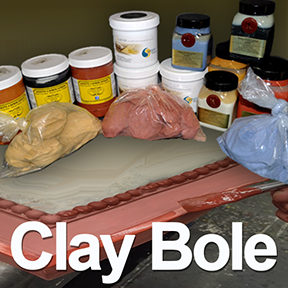
Path 1: True Gesso Ground
Best for carved wood, frames, ornament, and traditional work where the surface must be built, refined, and stabilized before bole and leaf can be applied.
Gesso provides the body of the system. It fills, smooths, and prepares the object so that later layers can sit on an even, workable foundation.
Path 2: Clay Bole Surface
Best for adding warmth, color influence, and the responsive surface quality required for water gilding and burnishing.
Red, yellow, black, and other bole tones affect the visual depth of the final gold and contribute to both traditional appearance and polishing performance.
Path 3: Burnish-Ready Finish
Best for projects where the goal is not simply to attach gold leaf, but to create the classic mirror shine associated with traditional water gilding.
This path depends on proper gesso, properly refined bole, correct moisture control, and a surface smooth enough to accept a clean burnish.
Where Clay and Gesso Fit in Gilding
Clay and gesso belong to the traditional side of gilding practice. They are most closely associated with water gilding, restoration, carved frame work, and fine decorative surfaces where the finish is built in layers rather than achieved through a single adhesive film. In this system, the surface is developed patiently and deliberately. Each layer contributes something different: body, smoothness, tone, absorbency, and finally reflectivity.
This is also where many misunderstandings begin. Clay and gesso are not decorative top layers. They are structural materials. If the ground is uneven, the gold will reveal it. If the bole is poorly refined, the burnish will suffer. If the wrong materials are used, the leaf may still adhere, but the result will not carry the authority, depth, or polish of a true traditional finish.
Iconography and Sacred Panels
Iconography is one of the most important and historically consistent use cases for clay and gesso. Traditional icon panels rely on a carefully built gesso ground over wood, followed by clay bole and water gilding to achieve luminous, symbolic gold fields. The process is deliberate and material-driven, where each layer supports both the visual and spiritual intent of the work.
Panel Preparation
Wood panels are sealed, cloth-reinforced when needed, and built up with multiple layers of true gesso to create a stable, crack-resistant surface for painting and gilding.
Bole and Gilding
Clay bole is applied and refined to receive genuine gold leaf. Water gilding allows the gold to be burnished, creating the radiant, reflective backgrounds associated with traditional icons.
Finish and Meaning
The polished gold is not only decorative—it carries symbolic weight. The quality of the ground and bole directly affects how the light interacts with the surface, reinforcing the visual presence of the icon.
Body
Gesso builds the physical body of the surface, helping to fill grain, soften transitions, and create a workable foundation for traditional gilding.
Warmth
Clay bole adds undertone and warmth beneath the gold, subtly influencing how the final leaf reads in both burnished and matte areas.
Polish
A properly prepared bole surface allows the gold to be compressed and polished with an agate burnisher to produce the classic mirror-like shine.
Core Material Decisions
Dry vs. Wet Systems
Some projects begin with dry powdered whiting and glue that are mixed into true gesso. Others rely on prepared or wet clay bole products for easier handling. The right choice depends on how traditional you need the workflow to be.
Bole Color
Red bole often gives warmth and classic richness beneath gold. Yellow can brighten. Black can deepen contrast. The color beneath the leaf influences the visual tone of the final surface.
Project Type
A museum-style frame restoration may call for a fully traditional gesso-and-bole sequence. A simpler decorative project may only require selected elements from that system depending on the finish goal.
Suggested Starting Sequence
Step 1: Identify the surface.
Determine whether the project is carved wood, a flat panel, furniture detail, or restoration work so you can decide how much build and refinement the ground requires.
Step 2: Build the ground.
Apply and refine the gesso layer until the surface is stable, smooth, and ready to accept bole without telegraphing unwanted texture.
Step 3: Prepare for leaf.
Apply the bole, refine it carefully, and choose the correct gilding liquor and gold leaf path based on the desired level of burnish and finish quality.
Working on a Traditional Frame?
Use true gesso, clay bole, genuine gold leaf, and burnishing tools for the full traditional water gilding path.
Need a Burnished Finish?
Choose the bole and burnisher path. The ability to polish the gold depends on the quality and refinement of the prepared ground.
Not Sure Where to Start?
Start with the surface type and finish goal, then work backward into gesso, bole, glue, and gold selection rather than buying materials in isolation.
Professional Insight
Clay and gesso are where traditional gilding becomes serious. These materials do not just prepare the surface; they define it. Every irregularity left in the ground will show later in the leaf. Every improvement made in the ground will amplify the final finish. That is why experienced gilders spend so much time below the gold line, because the brilliance of the finish is already being decided before the leaf is ever cut.
For restorers and decorative professionals, the lesson is simple: the ground is not background. It is part of the finish. If the object deserves a true traditional result, then clay and gesso deserve to be treated as the beginning of the gilding process, not as a technical aside.