
- Home
- Gilding on Stone
Gilding on Stone
How to apply genuine gold leaf, silver leaf, and metal leaf to stone, granite, marble, and masonry surfaces
Stone gilding combines durable surface preparation with the same core gilding logic used on other hard surfaces: primer, adhesive size, correct tack, and a leaf format suited to the project. Whether the work involves headstones, monuments, marble panels, concrete features, sandstone details, or architectural embellishments, the finish depends on how well the substrate is prepared before the gold is laid.
Gilded stone can be used for both interior and exterior applications, but the material decisions change depending on permanence, weather exposure, and the final look required. Choose the method before selecting products, paying special attention to primers, oil size, tack timing, and the right gold for long-term outdoor work.
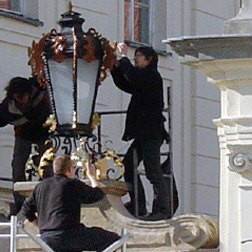
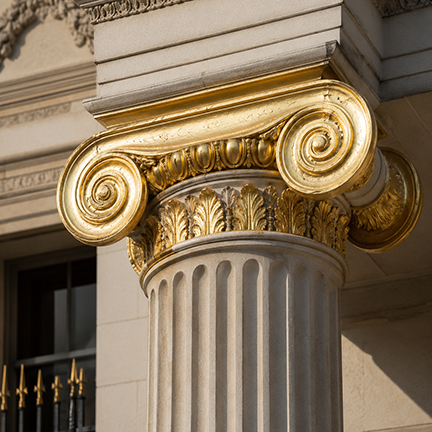
Path 1: Exterior Stone Gilding
Best for monuments, architectural masonry, outdoor lettering, and other exposed surfaces where the finish must resist weather over time.
This path typically uses a primer-sealer, oil size, and 23kt or 23.5kt genuine gold leaf for the best long-term durability.
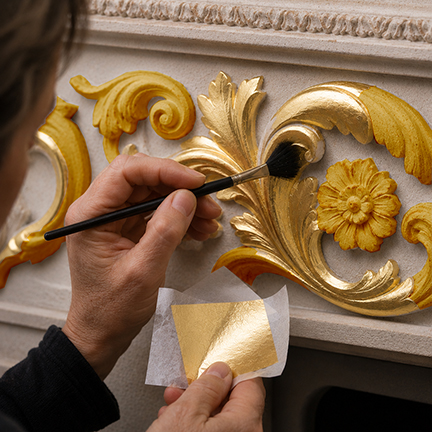
Path 2: Interior Stone and Marble
Best for protected interior stone, marble, and decorative masonry surfaces where the gold choice can be based more on color, luster, and design effect than weather resistance.
This path allows more flexibility in karat selection and visual finish, depending on the style and treatment of the project.
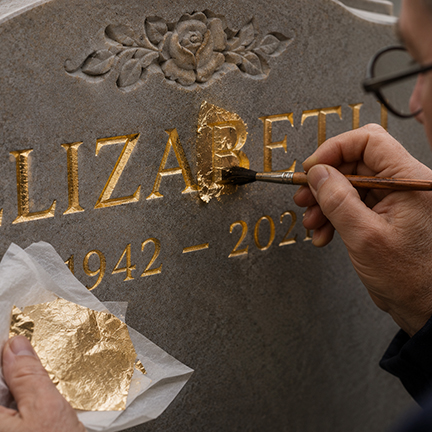
Path 3: Lettering and Detail Work
Best for carved letters, engraved lines, shallow relief, and smaller details where size control, tack timing, and careful clean-off are critical.
This path depends on a smooth primer coat, even sizing, and a leaf format that can be handled accurately on the shape and scale of the work.
Application Tutorial
The same core process used for metal gilding is also used for stone surfaces: prepare the substrate, apply the size evenly, wait for proper tack, lay the leaf, and clean off the surface once full coverage is achieved.
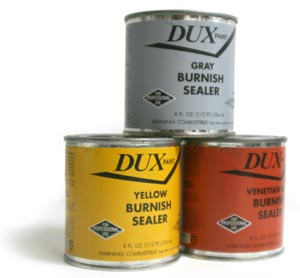
Step 1: Prime the Stone Surface
Stone, concrete, marble, granite, sandstone, and brick require a high-quality primer before gilding begins. A primer-sealer creates the smooth, stable surface the adhesive and gold need in order to perform well. Burnish Sealer is the recommended undercoat for this type of project and is available in Red, Gray, and Ochre. For traditional genuine gold work, Red or Ochre are especially effective beneath the leaf because they support warmth and overall finish quality.
This stage is especially important on porous or uneven masonry surfaces, where the leaf will only look as refined as the surface beneath it.
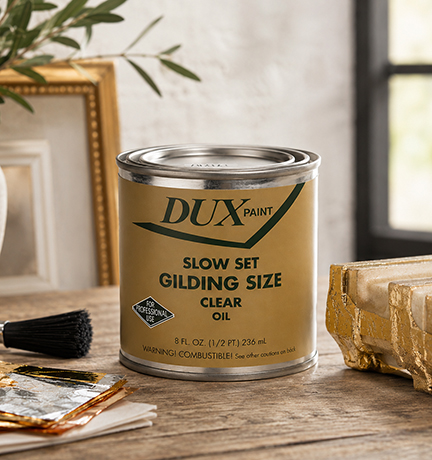
Step 2: Apply the Adhesive Size
Size is the adhesive that bonds the leaf to the stone surface. For genuine gold, silver, or metal leaf on stone, traditional oil sizes are the standard choice. Products such as Dux Quick Dry or Slow Set size provide reliable working time and strong adhesion.
Apply the size carefully and evenly, working toward a smooth film with no heavy buildup. Watch for pooling in carved letters, rough pockets, and recessed areas, since uneven film thickness will affect tack and lead to inconsistent bonding.
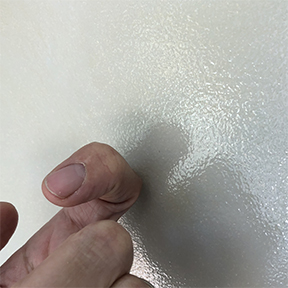
Step 3: Test the Tack
Tack timing is one of the most important parts of professional gilding. As the size dries, it moves from wet to dry. The correct moment to lay the leaf is when the size is no longer wet but still tacky—just before it reaches full dryness.
If the leaf is applied too early, it can shift or sink into the adhesive. If it is applied too late, adhesion weakens and the finish can become patchy. Clean, even stone gilding depends on reading this stage correctly.
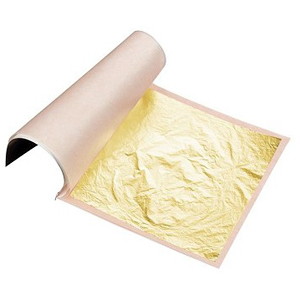
Step 4: Apply the Leaf
For exterior stone surfaces, 23.5kt genuine gold leaf is recommended, and 23kt gold is also acceptable. Anything less pure may not provide the durability and longevity needed outdoors. Genuine 23.5kt gold is available as individual sheets, patent leaf, and rolls, giving you flexibility depending on the scale of the project and the working conditions.
For exterior work, patent gold is often the most efficient format because the backing paper makes handling easier on stone and architectural surfaces. For interior stone surfaces, the karat can be selected based on the final color, luster, and decorative treatment required.
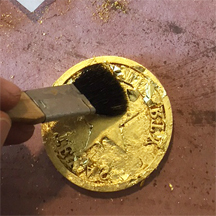
Step 5: Clean Off and Refine the Surface
Use a soft hair Squirrel Mop brush to remove excess leaf and lightly polish the surface. Before you begin cleaning, make sure the project has full gold coverage and that all holidays or missed areas have been filled. Then use the mop brush to dust away the extra leaf and refine the finish.
This stage is not aggressive polishing. It is controlled clean-off, used to reveal the final gilded surface clearly while preserving the integrity of the newly applied leaf.
Porosity Matters
Stone and masonry are often porous, which is why priming is such an important part of the system. The primer helps unify and stabilize the surface before sizing begins.
Exterior Means High Karat
For outdoor stone work, high-karat genuine gold is the correct path when durability and long-term appearance matter.
Even Film, Even Finish
The smoother and more consistent the primer and size film, the cleaner and more professional the finished gilded stone surface will look.
Suggested Starting Sequence
Step 1: Identify the substrate.
Decide whether you are working on granite, marble, sandstone, concrete, brick, or another masonry surface so the prep path is clear before sizing begins.
Step 2: Build the surface.
Prime the stone correctly and make sure the surface is smooth, sealed, and visually supportive before applying adhesive size.
Step 3: Match the gold to the environment.
Use exterior-grade high-karat gold for outdoor work and select interior gold by color and finish effect when the project is protected from weather.
Working on a Monument or Exterior Stone?
Use primer, oil size, and 23kt or 23.5kt genuine gold for the most durable long-term result.
Working on Interior Marble or Decorative Stone?
Select the gold by color and visual tone, since weather resistance is less restrictive in protected environments.
Working on Letters or Recessed Details?
Pay extra attention to pooling, tack timing, and clean-off so the leaf sits evenly and the finished lettering reads sharply.
Professional Insight
Stone gilding rewards the same discipline as metal gilding, but the substrate often demands even more respect. Porosity, texture, and uneven absorption can quickly show through the finish if the groundwork is rushed. The most successful projects are not simply leafed onto stone—they are built onto a surface that has first been made suitable for leaf.
That is why primer, size, and tack timing matter so much on masonry work. The gold may be what people notice first, but the surface beneath it is what makes the result look permanent, sharp, and convincing.